Residents of Kadema trained by Peace Council to sustain peace, resist violent acts
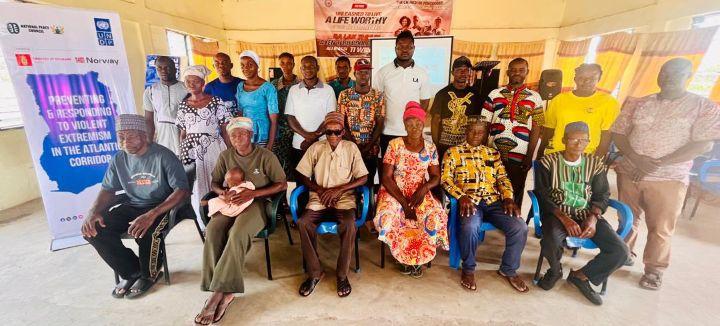
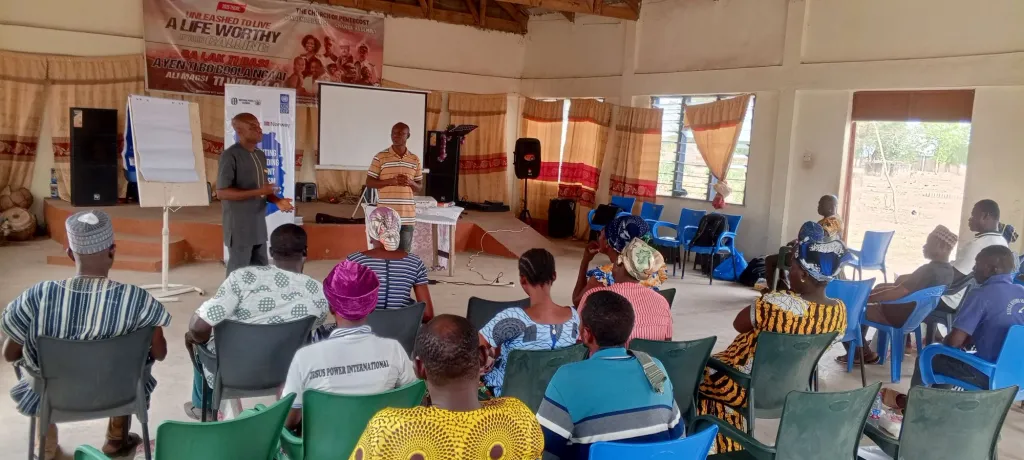
The Upper East Regional office of the National Peace Council has trained residents of Kadema in the Upper East Region to strengthen their capacity to prevent conflicts, promote peaceful coexistence and respond to threats of violent extremism.
The two-day training forms part of the Preventing and Responding to Violent Extremism in the Atlantic Corridor Project, being implemented with support from the United Nations Development Programme (UNDP) and funding from the Embassies of Denmark and Norway.
The initiative brought together 20 community members drawn from diverse groups, including youth, women, traditional authorities and representatives of minority groups, to build their knowledge in conflict prevention and resolution
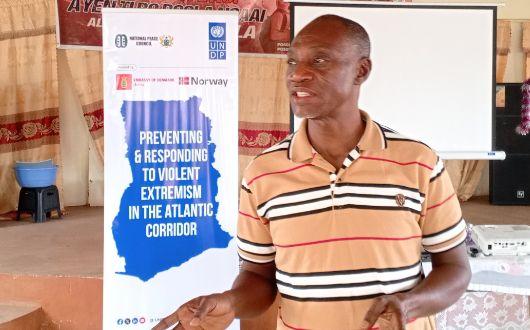
The Upper East Regional Executive Secretary of the Peace Council, Mr. Damien Asobayire, said the intervention was necessitated by the identification of Kadema as a potential conflict flashpoint due to underlying vulnerabilities within the area.
He explained that the training was aimed at equipping participants with practical skills to identify early warning signs of conflict and violent extremism, and to take appropriate action to prevent escalation.
“As part of this intervention, we are strengthening community-level structures to ensure timely detection, reporting and response to threats. The goal is to empower the people themselves to take ownership of peacebuilding efforts,” he said.
Mr. Asobayire indicated that the training would culminate in the formation of a nine-member Local Peace Committee (LPC) to serve as a community-based platform for dialogue, mediation and coordination of peace activities.
He said the committee would comprise representatives from key stakeholder groups, including the traditional leadership, youth, women, minority groups, persons with disabilities and actors within the local mining sector.
According to him, the LPC would operate for a four-year term and develop action plans tailored to address specific conflict risks identified within the community.
Participants were taken through a range of topics, including conflict analysis, conflict dynamics, mediation, negotiation and dialogue, as well as early warning and early response systems.
Participants were taken through a range of topics, including conflict analysis, conflict dynamics, mediation, negotiation and dialogue, as well as early warning and early response systems.
The training also emphasised the promotion of religious tolerance through interfaith dialogue, confidence-building among community members and strengthening collaboration with security agencies.
On the second day, participants were introduced to early warning systems and indicators of violent extremism, enabling them to better detect and respond to emerging threats.
Some participants who spoke to the GNA described the training as timely and impactful.
Some participants who spoke to the GNA described the training as timely and impactful.
A participant, Mr David Alhassan, said the sessions had deepened his understanding of how minor issues such as gossip, jealousy and misunderstandings could escalate into major conflicts if not addressed promptly.
“Conflict often starts from something very small, but if it is not managed well, it can grow and affect many people. I have learned that it is important to intervene early and help resolve misunderstandings before they escalate,” he said.
He pledged to apply the knowledge gained to mediate disputes within the community and educate others on peaceful ways of resolving differences.
The Assembly Member for the Chansa Electoral area and representative of the Kadema Assembly members on the LPC, Mr. Mark Atog-nyadebey, expressed appreciation to the Peace Council for bringing the initiative to the area.
He said peace was a prerequisite for development and assured that participants would extend the knowledge acquired to other community members.
“Without peace, development cannot take place. After this training, we will intensify education on the importance of peaceful coexistence so that our people can go about their daily activities without fear,” he said.
The programme is expected to enhance community capacity to identify and respond to early warning signs of conflict and radicalisation, increase the participation of women and youth in peacebuilding processes, and improve trust between communities and security agencies.
It will also lead to the establishment of functional Local Peace Committees across selected communities, thereby strengthening grassroots structures for sustainable peace in the Upper East Region.