National Peace Council Calls for Stronger Security-Community Collaboration in Upper East
Bolgatanga Upper East — The National Peace Council (NPC) has called for stronger collaboration, trust and information-sharing between law enforcement agencies and civilian stakeholders to prevent conflicts and emerging security threats.
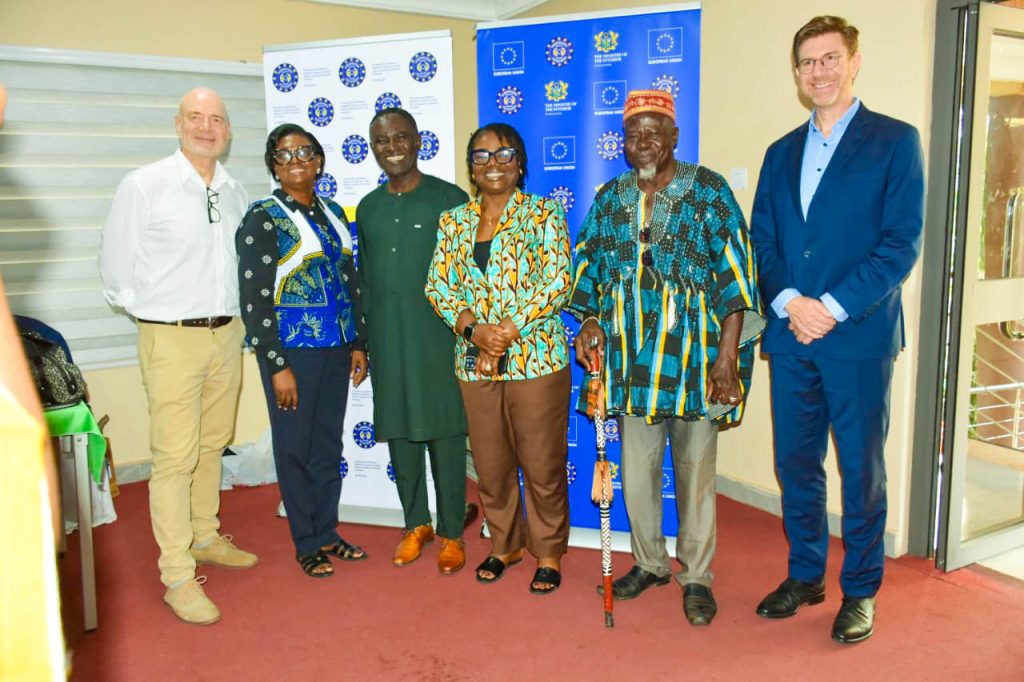
The call was made during a three-day stakeholder dialogue on: “Strengthening Collaboration between Law Enforcement Agencies and Civilian Stakeholders at the REGSEC, DISEC and Community Levels in the Upper East Region.” The engagement was organised by the Office of the Technical Advisor to the Minister for the Interior in partnership with the European Union Security and Defence Initiative in Support of Gulf of Guinea Countries in West Africa.
The Upper East Region served as a pilot for the initiative, bringing together security agencies, traditional authorities, the NPC, the Red Cross, youth leaders and other civilian stakeholders to explore ways of improving coordination, early warning and conflict prevention.
National Executive Secretary of the NPC, Dr. George Amoh, who served as Guest Speaker, highlighted the Council’s mandate in preventing, managing and resolving conflicts and building sustainable peace. He stressed that effective conflict prevention requires close collaboration among state institutions, security agencies and communities.
Dr. Amoh also underscored the importance of using reliable conflict data to guide interventions, noting that the NPC has recorded more than 600 conflicts in its conflict database. He cautioned stakeholders against relying solely on media perceptions when assessing conflict trends and determining appropriate responses.
Opening the engagement, COP Maame Yaa Tiwaa Addo-Danquah emphasised the importance of strong relationships between security institutions and the communities they serve, stressing that effective security depends on transparency, respect and sustained engagement.
Participants identified trust-building, continuous dialogue, effective information-sharing, community participation and evidence-based conflict prevention as critical to strengthening Ghana’s peace and security architecture.
The NPC participated actively throughout the engagement, with its staff serving as table hosts and facilitators. The Council also used the platform to deepen stakeholders’ understanding of its mandate and role in Ghana’s conflict prevention and peacebuilding architecture.
As the Upper East pilot concludes, stakeholders recommended regular security-community dialogue, stronger coordination at the REGSEC, DISEC and community levels, enhanced information-sharing, greater community participation and systematic documentation of lessons to inform possible replication in other regions.
The dialogue reaffirmed that peace and security are shared responsibilities, requiring sustained cooperation among security institutions, traditional authorities, communities, civil society and other stakeholders.