Western North Regional Peace Council Organizes Peace Education and Sensitization Programme for Junior High School Students
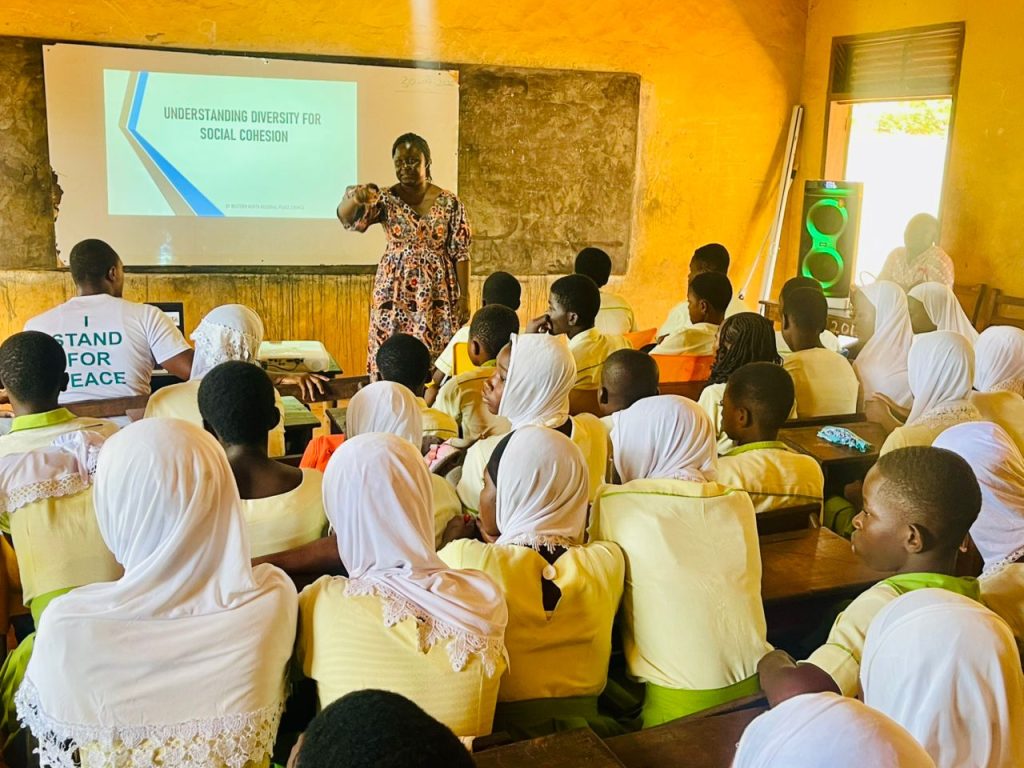
The Western North Regional Peace Council (WNRPC), in collaboration with the National Commission for Civic Education (NCCE), organized a Peace Education and Sensitization Programme for students of Sefwi Boako English/Arabic Junior High School and Punikrom M/A Junior High School on 6th May 2026.
The programme aimed to promote awareness among students on the importance of diversity, inclusion, peaceful coexistence, and personal safety within schools and communities. It also sought to equip students with practical knowledge and skills for conflict prevention and resolution.
Addressing the students, Elizabeth Boduwah, Acting Regional Executive Secretary of the WNRPC, emphasized that recognizing and valuing diversity is essential for promoting inclusion, tolerance, and mutual respect among students. She explained that schools and communities are made up of people from different backgrounds, cultures, and beliefs, and these differences should be embraced rather than used as grounds for discrimination or exclusion.
She cautioned that exclusion and prejudice can undermine unity and create division and conflict, while inclusion strengthens relationships, builds empathy, and promotes harmonious coexistence. She encouraged students to respect one another and contribute positively toward creating supportive and peaceful learning environments.
Also speaking at the programme, Stephen Owusu, Programmes Manager of the NCCE, expressed concern over the increasing cases of child kidnapping in parts of the country and stressed the need for students to remain vigilant and security-conscious at all times.
He advised students to avoid interacting with strangers or accepting gifts from unknown persons, and cautioned them against following individuals who attempt to lure them with promises, assistance, or offers. He further encouraged students to always inform parents, guardians, or teachers before going anywhere, move in groups instead of alone, and promptly report suspicious activities or behaviour to trusted adults or authorities.
The sensitization programme strengthened students’ understanding of peaceful coexistence, diversity, and personal safety, while reinforcing the importance of making responsible decisions and maintaining respect for others within the school environment.
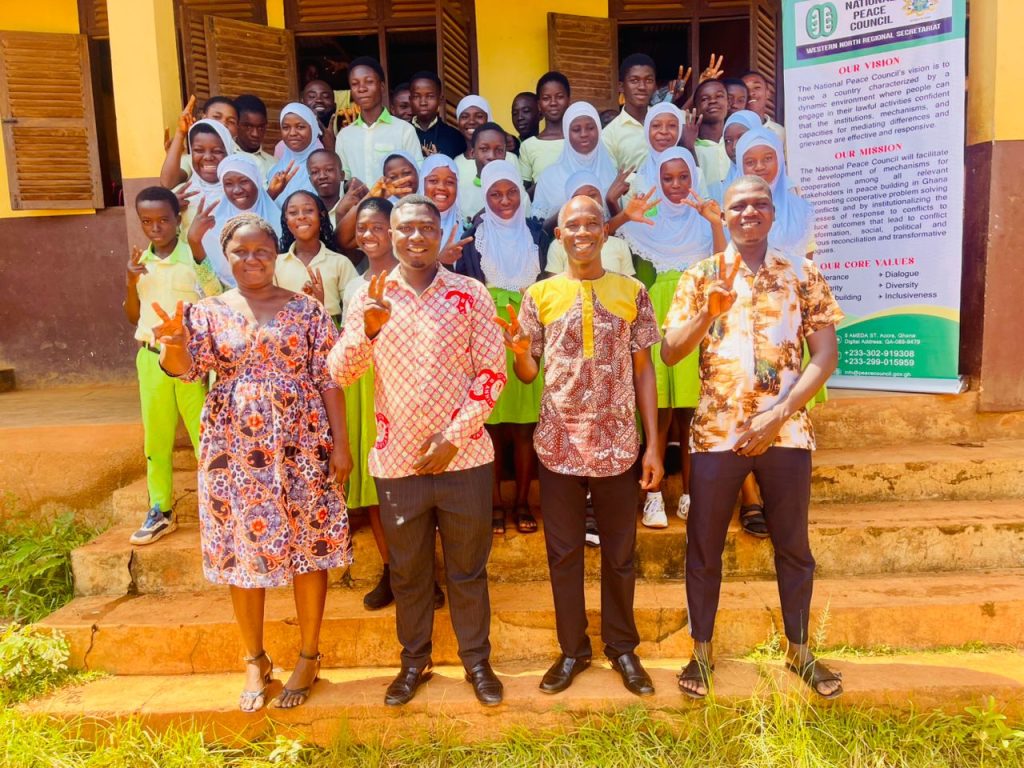
The programme was attended by teaching staff, students, and representatives from the Western North Regional Peace Council and the National Commission for Civic Education.