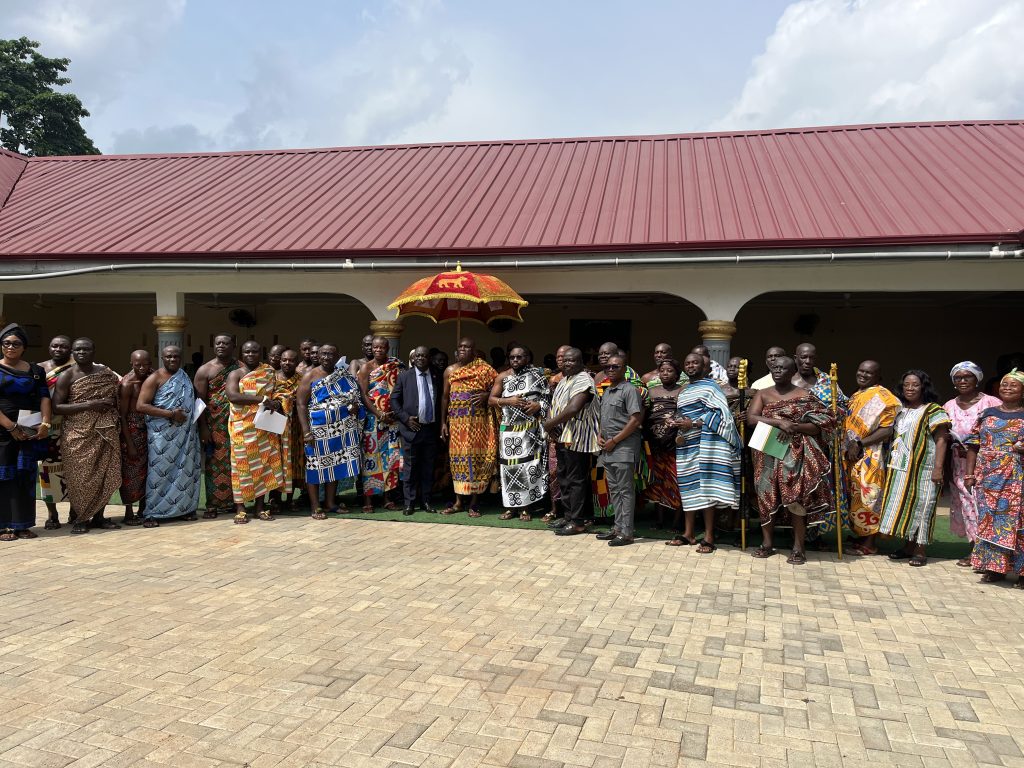
One-Day Capacity Development Programme for Akwamu Traditional Authorities and Local Government Officers
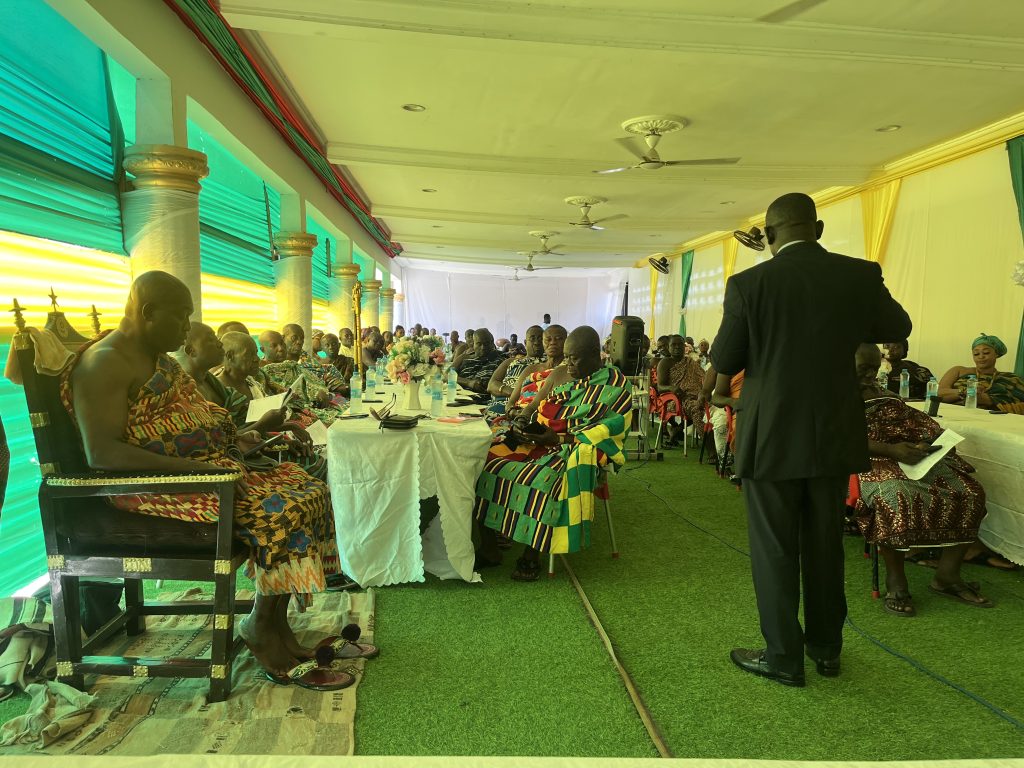
The Eastern Regional Peace Council (ERPC), in collaboration with the Asuogyaman District Assembly and the Akwamu Traditional Council, organized a one-day capacity development programme at the Akwamufie Palace aimed at strengthening traditional and local governance systems in the Asuogyaman District. The engagement brought together traditional leaders and local government officers to enhance their knowledge and skills in dispute resolution, governance, and community development.
The project was designed to enhance participants’ understanding of customary law and statutory provisions in relation to adjudication processes; strengthen the capacity of traditional authorities in customary arbitration and dispute resolution; deepen knowledge of the principles of natural justice to promote fairness, impartiality, and accountability; and improve understanding of the role of traditional governance in local economic development, community sustainability, and peaceful coexistence.
The expected outcomes included enhanced knowledge and application of customary and statutory legal frameworks among traditional authorities and local government officers; improved capacity to conduct fair, transparent, and impartial dispute resolution processes; strengthened collaboration between traditional authorities and local government institutions in promoting peace and justice; and increased contribution of traditional governance systems to local economic development and social cohesion.
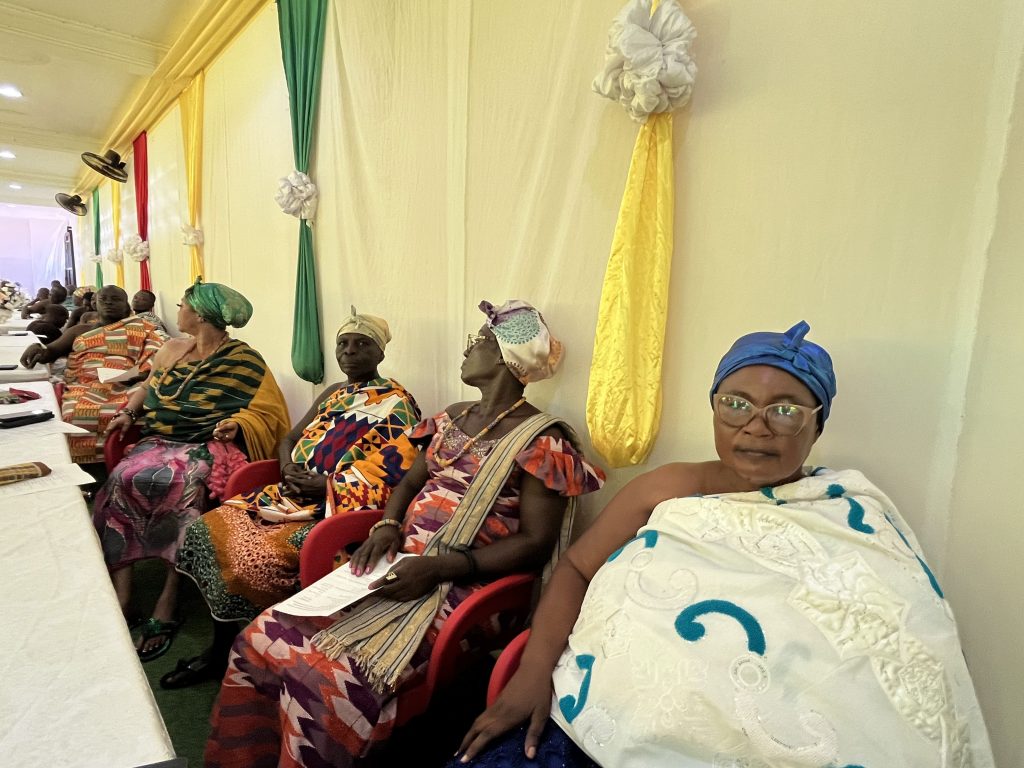
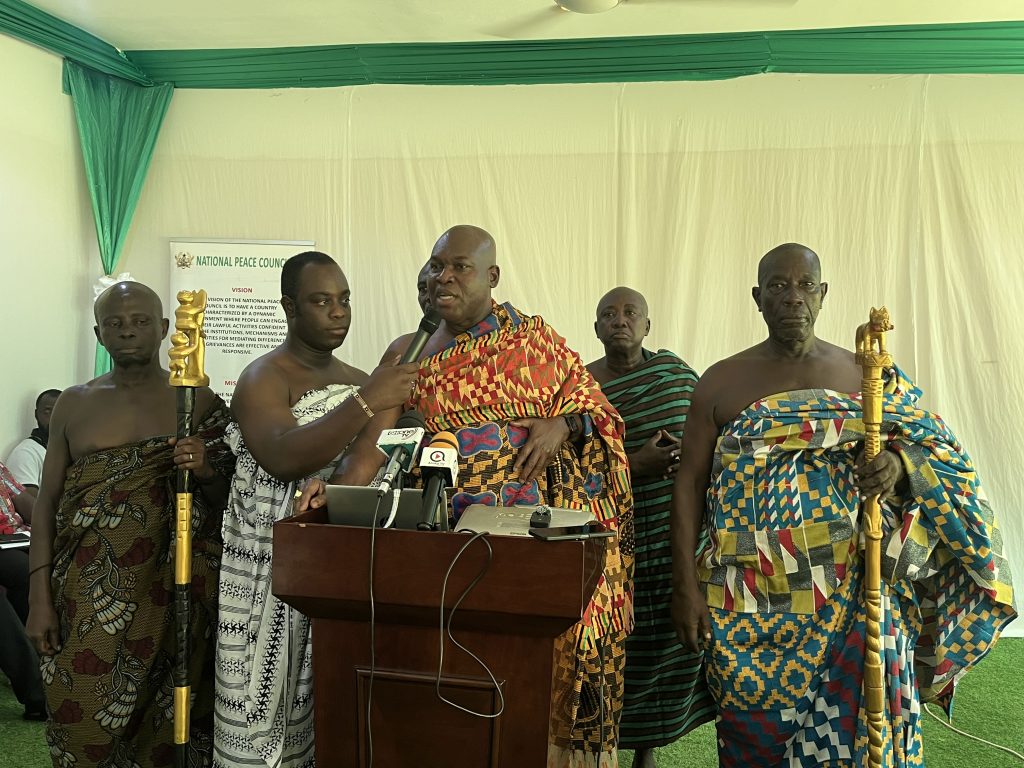
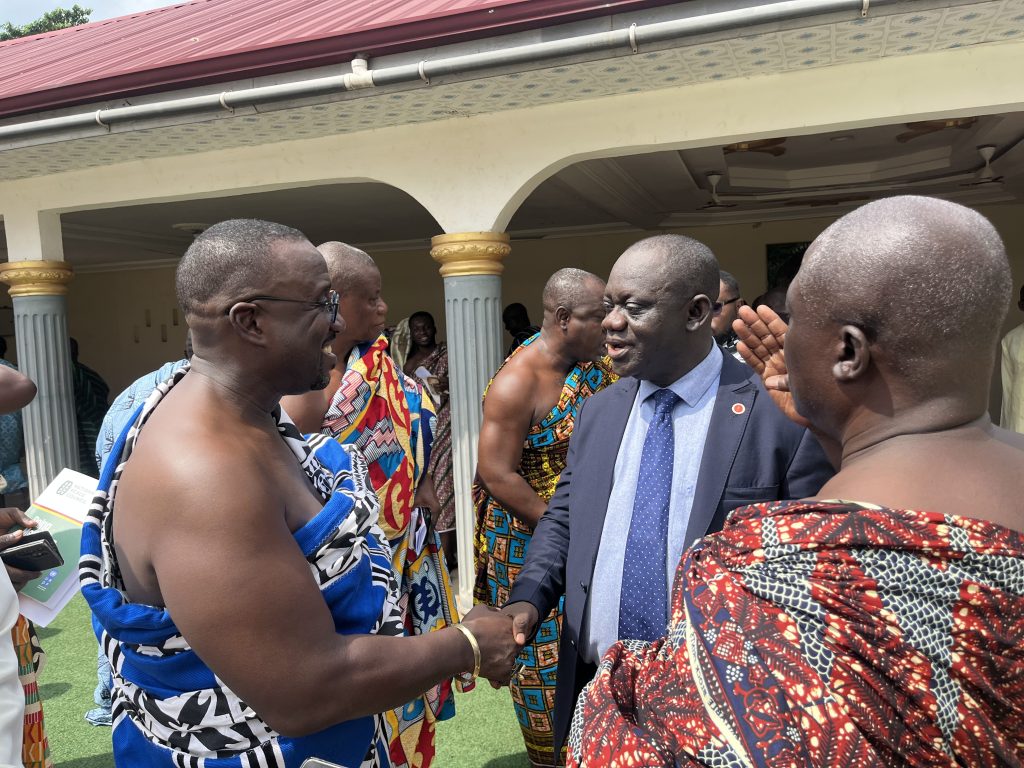
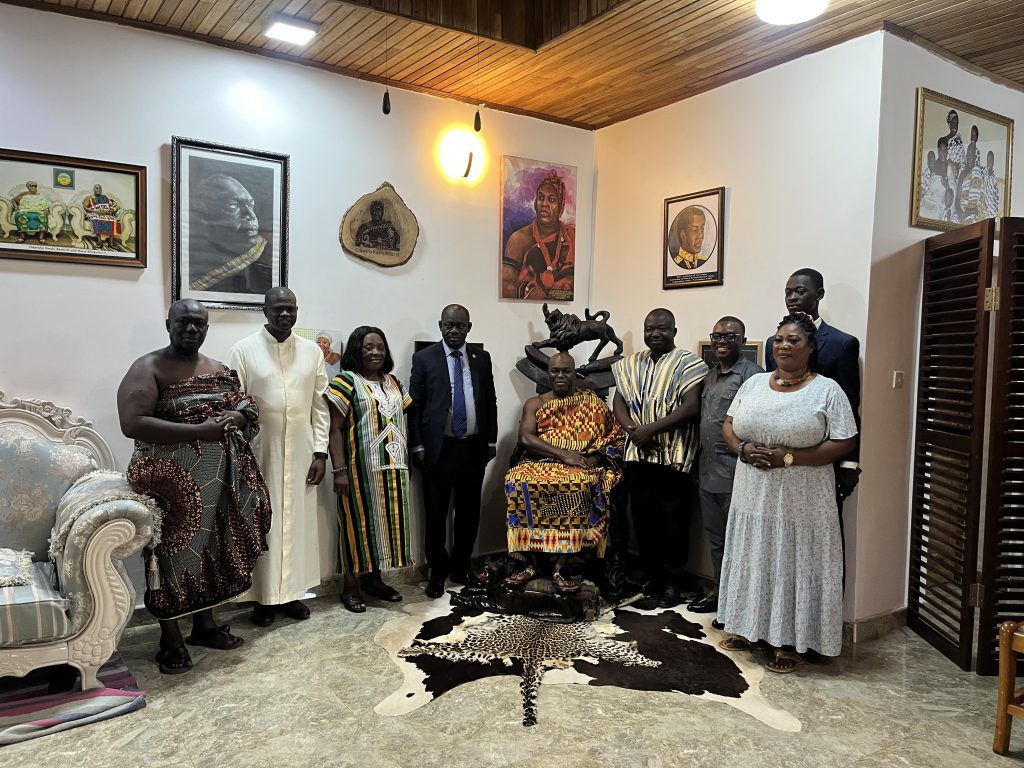
The programme was funded by the Eastern Regional Peace Council (ERPC) and held on 19th June, 2026 at the Akwamufie Palace in the Asuogyaman District. Dignitaries present included Prof. Mark Boadu (Chairman, Eastern Regional Peace Council), Odeneho Kwafo Akoto II (Paramount Chief of the Akwamu Traditional Area), Lawyer Alex Nartey (Legal Practitioner and Governance Consultant), the District Coordinator (Asuogyaman District), the Peace Desk Officer (Asuogyaman District), members of the Eastern Regional Peace Council, and traditional leaders and elders of the Akwamu Traditional Area.
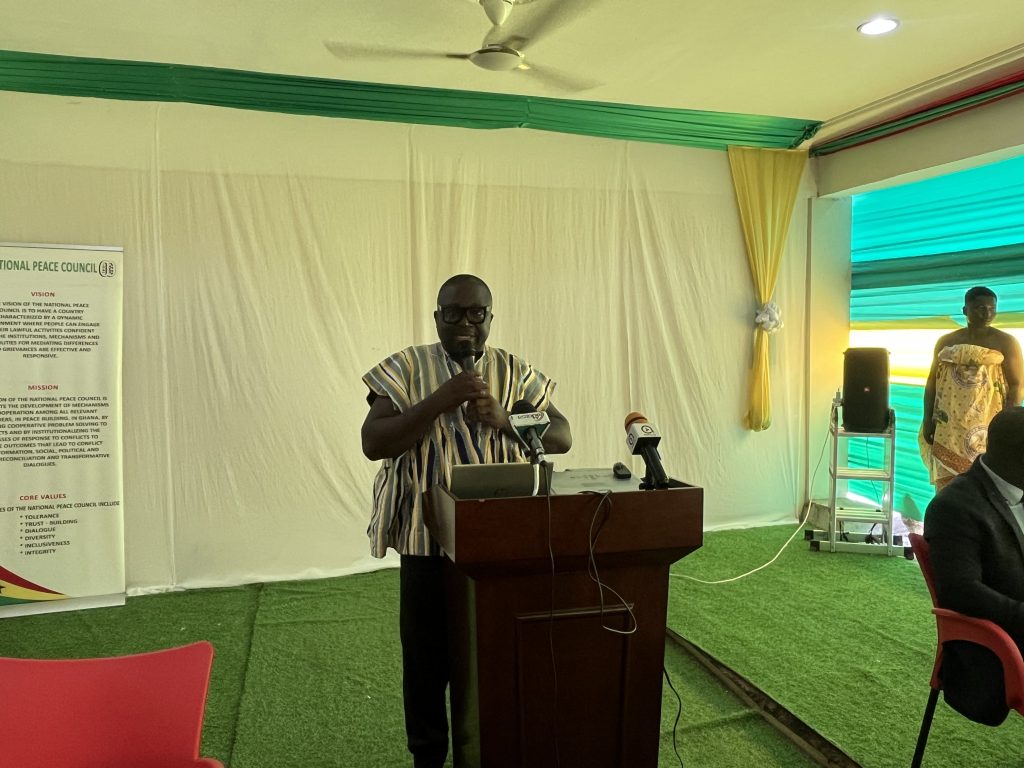
In his address, Prof. Mark Boadu emphasized the importance of strengthening partnerships between traditional authorities and local government institutions in promoting peace, justice, and sustainable development. He noted that traditional leaders remain key stakeholders in conflict prevention and community governance and therefore require continuous capacity building to respond effectively to emerging challenges. He encouraged participants to apply the knowledge gained to improve dispute resolution mechanisms and promote peaceful coexistence within their communities.
Odeneho Kwafo Akoto II commended the Eastern Regional Peace Council for the initiative and reaffirmed the commitment of the Akwamu Traditional Council to promoting peace, justice, and development. He stressed the importance of integrity, fairness, and accountability in traditional leadership and encouraged stronger collaboration with local government authorities to address community challenges effectively.
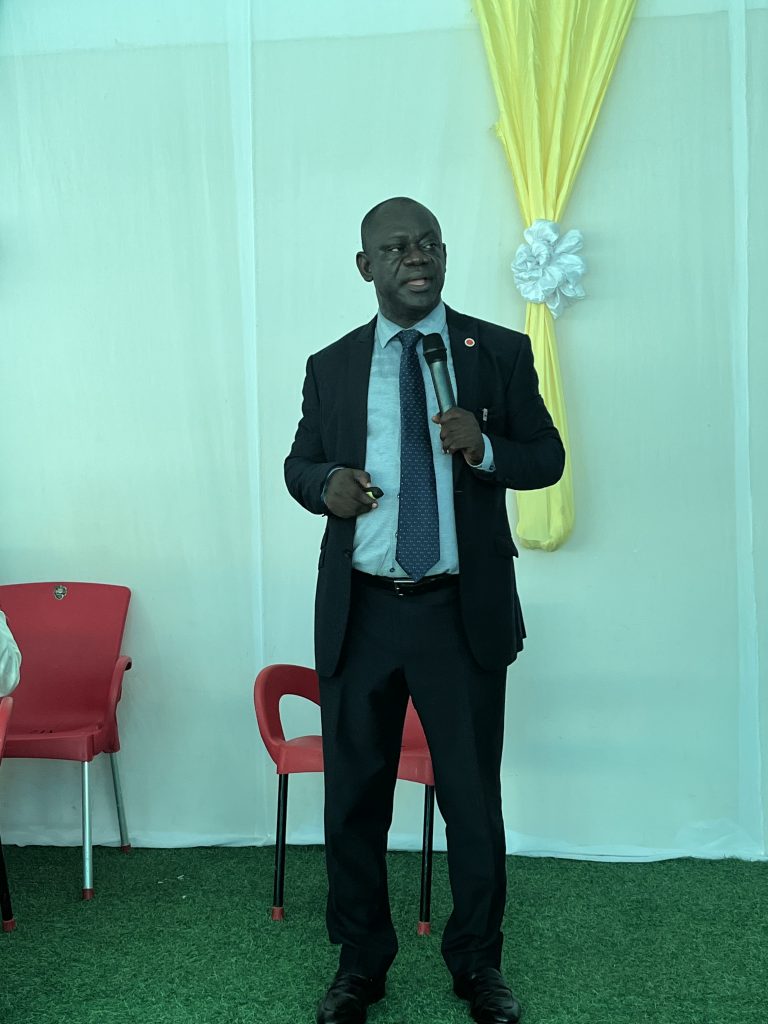
Lawyer Alex Nartey, the lead facilitator, delivered the main technical session, focusing on strengthening the capacity of traditional authorities and local government officers within Ghana’s legal and governance framework. He explained the relationship between customary law and statutory provisions, emphasizing that customary practices must align with the Constitution and laws of Ghana. He highlighted the importance of respecting human rights, due process, and legal principles in traditional adjudication, noting the complementary roles of customary and state institutions in justice delivery.
He further discussed customary arbitration, emphasizing its effectiveness in resolving disputes through dialogue, mediation, and reconciliation while preserving social harmony. He encouraged fairness, transparency, and accountability in traditional proceedings. He also elaborated on the principles of natural justice, stressing the right to be heard, impartiality, and the avoidance of conflicts of interest to ensure credibility and public trust in traditional institutions.
Additionally, he highlighted the role of traditional governance in local economic development and community sustainability, noting that chiefs and elders play a vital role in land management, environmental protection, investment promotion, youth empowerment, and conflict prevention. He emphasized that strong collaboration between traditional authorities and local government institutions enhances community stability and sustainable development outcomes.
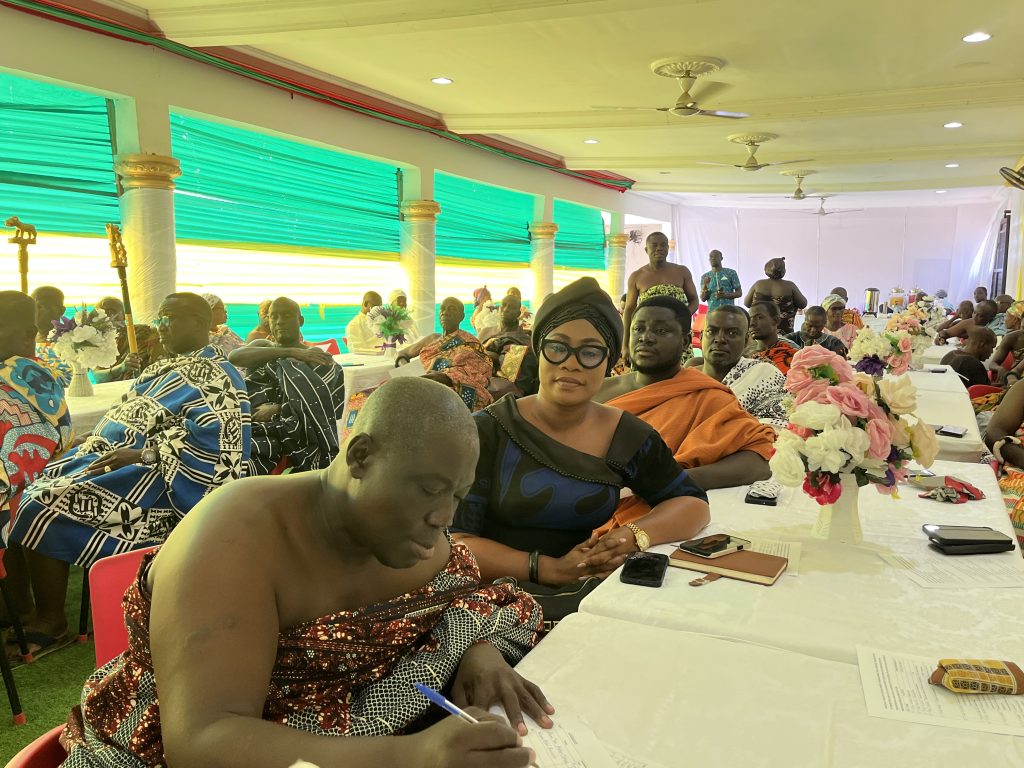
The session was highly interactive, with participants sharing experiences and engaging in discussions on challenges in customary adjudication and local governance. These exchanges provided practical insights into improving governance systems within the district.
The programme brought together approximately 50 participants, including chiefs, elders, opinion leaders, and local government officers from the Akwamu Traditional Council and Asuogyaman District Assembly. It significantly strengthened collaboration between traditional and local governance institutions and contributed to ongoing efforts to promote peace, social cohesion, and sustainable development within the Asuogyaman District.