Western North Regional Peace Council Educates Public on Managing Differences Before They Become Conflict
The Western North Regional Peace Council (WNRPC) has intensified efforts to promote tolerance, mutual respect, and peaceful coexistence through a radio engagement on the theme “Managing Differences Before They Become Conflict.”
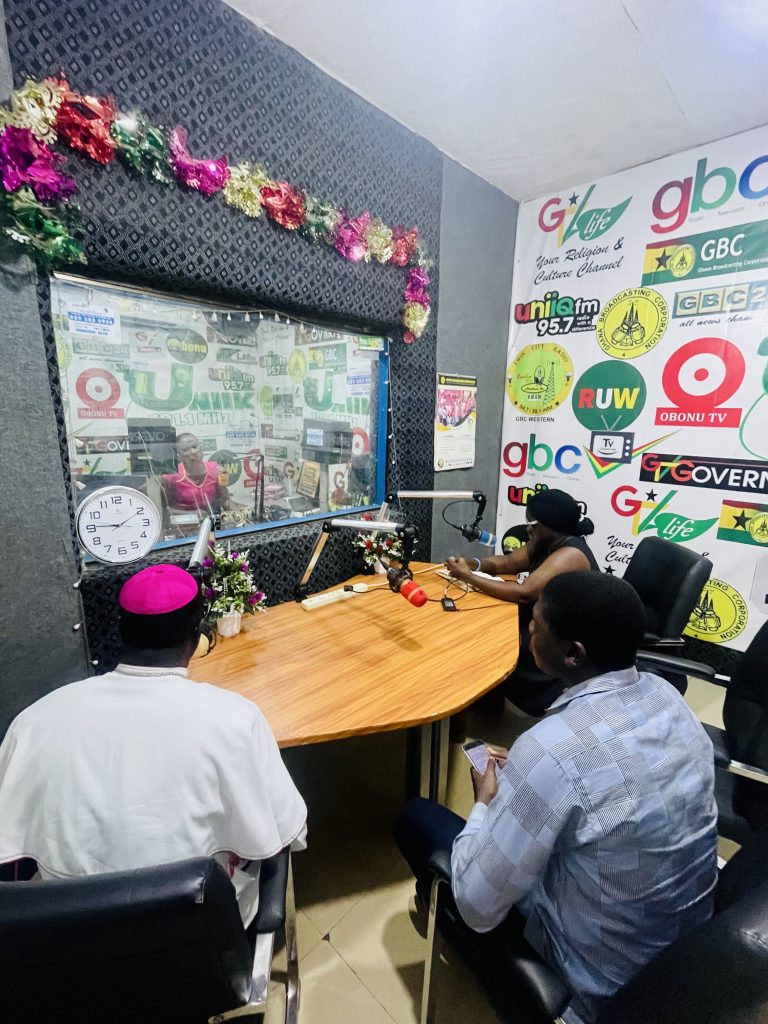
The programme, held on 30 October 2026 at Uniiq FM in Sefwi Boisonmeiso, was organised by the Western North Regional Peace Council in collaboration with Uniiq FM. It sought to encourage individuals and communities to appreciate diversity, identify disagreements at their early stages, and adopt peaceful approaches to resolving differences before they escalate into conflict.
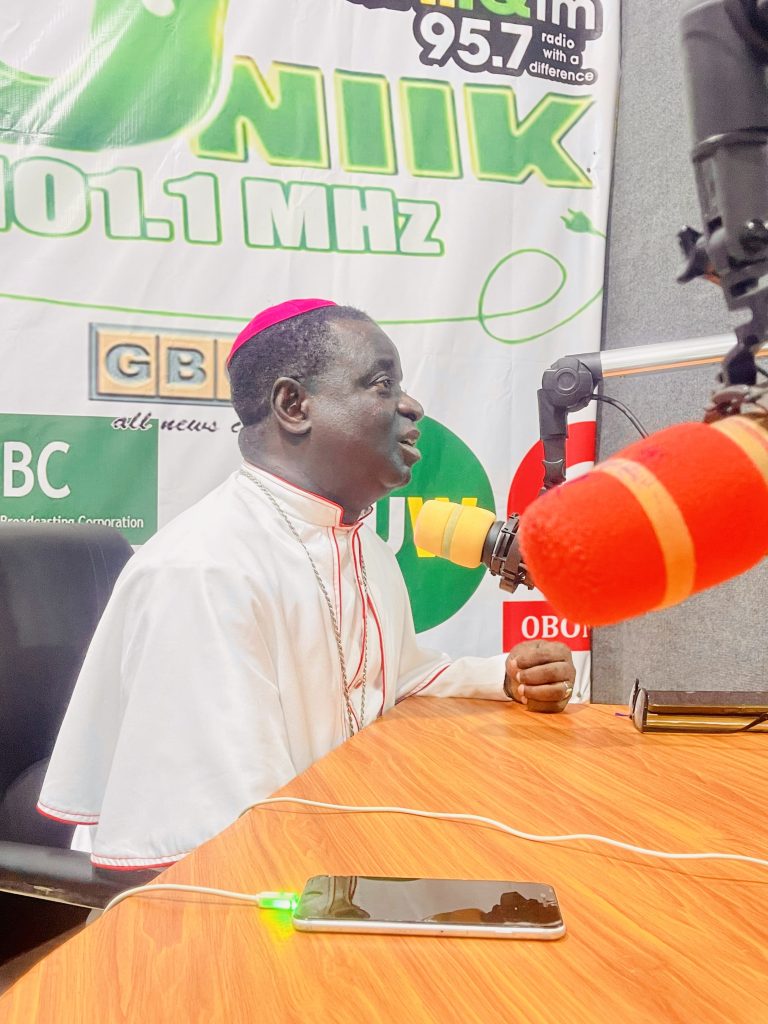
The engagement featured the Chairman of the Western North Regional Peace Council, Most Rev. Samuel Nkuah-Boateng, and the Acting Regional Executive Secretary, Elizabeth Boduwah, who shared insights on the importance of tolerance, dialogue, negotiation, and mediation in maintaining peaceful communities.
Understanding the Role of the Peace Council in Conflict Prevention
In his presentation, Most Rev. Samuel Nkuah-Boateng highlighted the mandate of the National Peace Council, established under the National Peace Council Act, 2011 (Act 818), to prevent, manage, and resolve conflicts through non-violent means.
He explained that Regional Peace Councils work with relevant stakeholders to identify emerging tensions and facilitate peaceful interventions within their respective regions.
He noted that differences in political opinions, ethnicity, culture, and traditional interests are inevitable in every society. However, such differences should not become sources of hostility, discrimination, or violence.
The Chairman encouraged individuals and communities to embrace tolerance, mutual respect, dialogue, and effective communication when addressing disagreements. He particularly emphasised that political opposition should not be treated as enmity and that ethnic or cultural differences should never serve as grounds for discrimination.
He further urged the public to address disagreements at their early stages through peaceful means, stressing that timely intervention is essential to preventing conflict escalation, strengthening social cohesion, and promoting sustainable community development.
Addressing Political, Chieftaincy and Land-Related Disputes
The Acting Regional Executive Secretary, Elizabeth Boduwah, highlighted the importance of managing differences peacefully to promote social cohesion and community stability.
She observed that political differences, particularly during election periods, could create divisions among individuals and communities if not properly managed. She therefore called for political tolerance, mutual respect, and peaceful coexistence regardless of political affiliation.
On ethnic diversity and traditional disputes, she explained that disagreements relating to chieftaincy, land ownership, and customary interests could be addressed through dialogue, mediation, tolerance, and respect for the rule of law.
She identified chieftaincy-related tensions, including disagreements over succession, legitimacy, traditional authority, boundaries, and customary practices, as issues requiring attention through recognised traditional and institutional processes.
Regarding land ownership disputes, she advised communities to pursue dialogue and established legal procedures rather than resorting to threats, violence, or self-help.
She also underscored the important roles of the Regional and National Houses of Chiefs and other relevant institutions in facilitating the peaceful resolution of chieftaincy disputes.
Promoting Individual Responsibility and Peaceful Coexistence
The engagement further emphasised the responsibility of individuals to contribute to peace through their words, attitudes, and actions.
Participants and the listening public were encouraged to reject violence, discrimination, intimidation, and retaliation while embracing dialogue, negotiation, and mediation as practical tools for resolving disagreements.
The programme reinforced the understanding that diversity should be recognised as an opportunity to strengthen communities rather than a basis for division. It also highlighted the importance of addressing tensions early before they develop into more serious disputes.
Conclusion
The radio engagement reaffirmed the Western North Regional Peace Council’s commitment to promoting a culture of peace through public education, stakeholder collaboration, and non-violent conflict prevention.
By encouraging tolerance, mutual respect, effective communication, and the peaceful management of differences, the Council continues to support efforts towards building cohesive, inclusive, and resilient communities across the Western North Region.